
Benfica vs. Sporting: Your UItimate Guide to the Greatest Rivalry in Portuguese Football
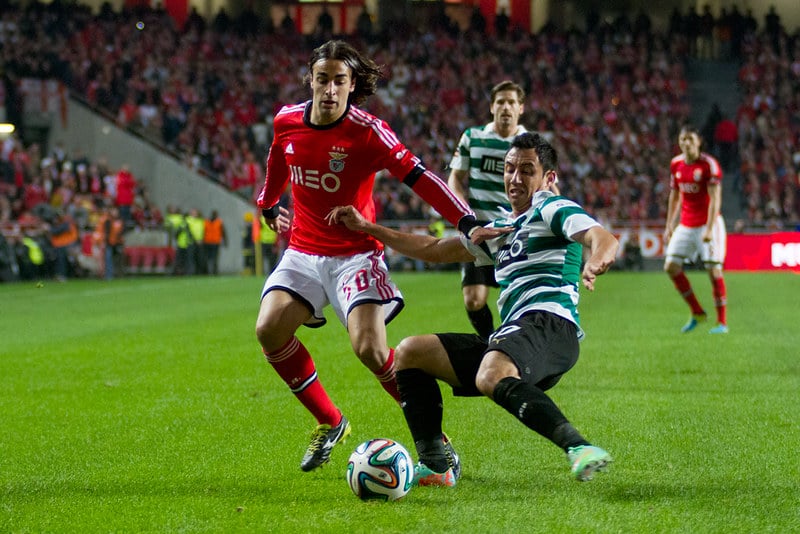
In the annals of Portuguese football, no rivalry captures the imagination quite like the clashes between Sport Lisboa e Benfica (commonly known as Benfica) and Sporting Clube de Portugal (known as Sporting). This historic rivalry, known as the Derby de Lisboa, transcends the sport, becoming a cultural phenomenon deeply intertwined with the identity of Lisbon and Portugal as a whole.
It is a tale of two footballing institutions, two fiercely loyal fanbases, and a century-long narrative filled with dramatic matches, legendary players, and unforgettable moments. Fans who have followed this rivalry closely for decades have witnessed how this derby has evolved, how its intensity has grown, and how it remains as passionate as ever.
To truly understand Benfica and Sporting, we must first delve into their histories, explore their traditions, and appreciate the countless moments that have defined them. The Foundations - Benfica and Sporting Sport Lisboa e Benfica (Benfica) Founded on February 28, 1904, Benfica was born out of the desire of a group of football enthusiasts to create a club that embodied the working-class spirit of Lisbon.
Originally named "Sport Lisboa," it merged with Grupo Sport Benfica in 1908, adopting the name that we now know. From its inception, Benfica established itself as a club for the people-rooted in the neighborhoods of Lisbon where blue-collar workers worked hard for their families.
The club quickly rose through the ranks of Portuguese football, winning its first national championship in 1936. Over the years, Benfica became synonymous with success, particularly during its golden era in the 1960s, when the club, under the legendary coach Béla Guttmann, won two consecutive European Cups (1961 and 1962).
The Eagles, as they are known, have amassed a staggering number of domestic trophies, including a record 38 Primeira Liga titles and 26 Taça de Portugal victories. Their iconic red jerseys and eagle emblem are a symbol of pride for their supporters, who are known as the Benfiquistas.
Benfica's giant trophies, Nelson Correia, Flickr Sporting Clube de Portugal (Sporting) Founded earlier than Benfica on July 1, 1906, Sporting's origin is different but equally rich in tradition. Created by a group of aristocrats led by José Alvalade, Sporting was originally intended to be a multi-sport club.
Even today, the club excels in various sports beyond football, from athletics to handball, embodying the philosophy that Sporting is more than just a football team-it is a symbol of Lisbon's upper class, its elegance, and its versatility. In football, Sporting established itself as a force in the 1940s and 1950s, led by a legendary forward line known as the "Five Violins" ( Cinco Violinos ).
Players like Fernando Peyroteo, José Travassos, Albano Pereira, Jesus Correia, and Manuel Vasques combined to form one of the deadliest attacks in European football at the time. Sporting won seven Primeira Liga titles in the 1940s and 1950s, cementing its status as one of Portugal's premier footballing institutions.