
FEATURE fierce rivalry to global spectacle: How Der Klassiker has evolved since the early 2000s
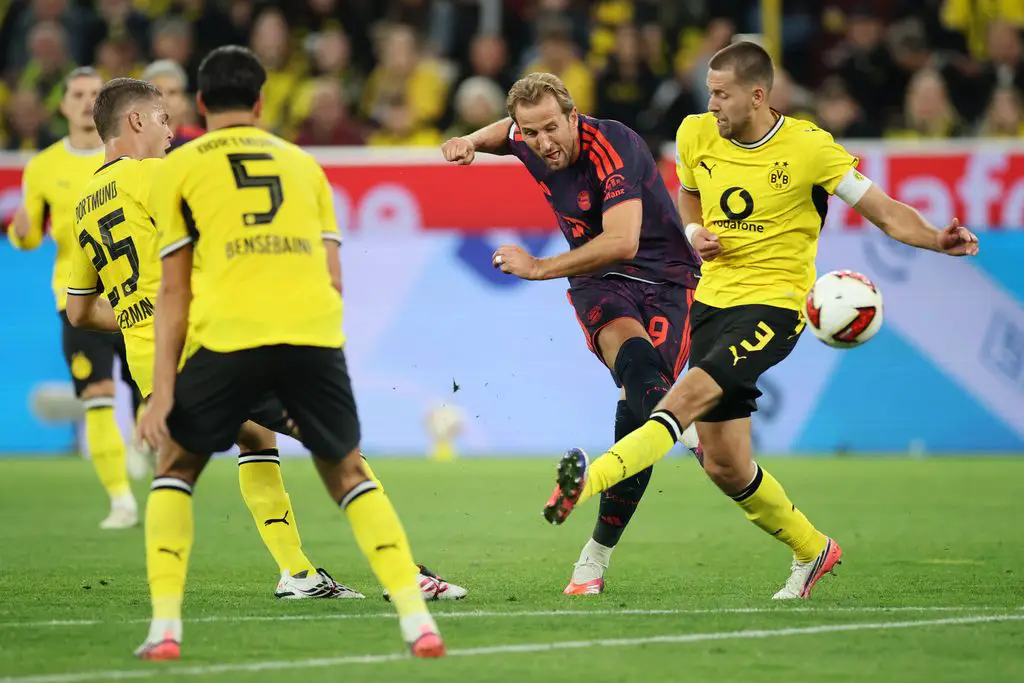
Few fixtures in German football have undergone a transformation quite like Bayern Munich against Borussia Dortmund. Today, Der Klassiker is marketed as the Bundesliga's biggest attraction, bringing together two of Germany's most recognisable clubs in a match followed by millions around the world.
However, the rivalry that supporters experienced at the beginning of the 2000s was considerably different from the spectacle we know in 2026. Back then, Bayern and Dortmund were already major competitors, but their encounters were defined more by sporting hostility, contrasting club identities and the battle for domestic supremacy than by the international branding surrounding the fixture today.
When the rivalry was about more than football The early 2000s represented one of the most intense periods in the relationship between the two clubs. Bayern entered the decade as Germany's dominant force, while Dortmund had already demonstrated their ability to challenge that supremacy by winning consecutive Bundesliga titles in 1995 and 1996 and the Champions League in 1997.
The infamous 2001 encounter in Munich, which finished 1-1, produced 14 yellow cards and three red cards, illustrating the hostility that characterised the fixture during that period. Dortmund's Bundesliga triumph in 2001/02 reinforced their status as genuine competitors, but financial difficulties soon transformed the club's trajectory.
While Bayern maintained their domestic dominance, Dortmund spent much of the following years rebuilding. The rivalry remained historically significant, but it was no longer consistently a direct confrontation between two title contenders.
Klopp transformed Der Klassiker Everything changed with Jürgen Klopp's arrival at Dortmund in 2008. His energetic, high-pressing football turned a developing squad into one of Europe's most exciting teams.
Dortmund won consecutive Bundesliga titles in 2010/11 and 2011/12 before completing the domestic double in 2012. For the first time in years, Bayern faced a rival capable of challenging them consistently, not simply over 90 minutes but across an entire season.
The rivalry reached its modern peak in 2013 when both clubs met in the UEFA Champions League final at Wembley. Bayern's 2-1 victory, secured by Arjen Robben's late winner, represented much more than another European trophy.
It confirmed that German football had become the centre of European attention, with two Bundesliga clubs competing for the continent's biggest prize. That period also accelerated the transformation of Der Klassiker into an international product.