
From Tiki-Taka to the High Press: Modern Football Tactics
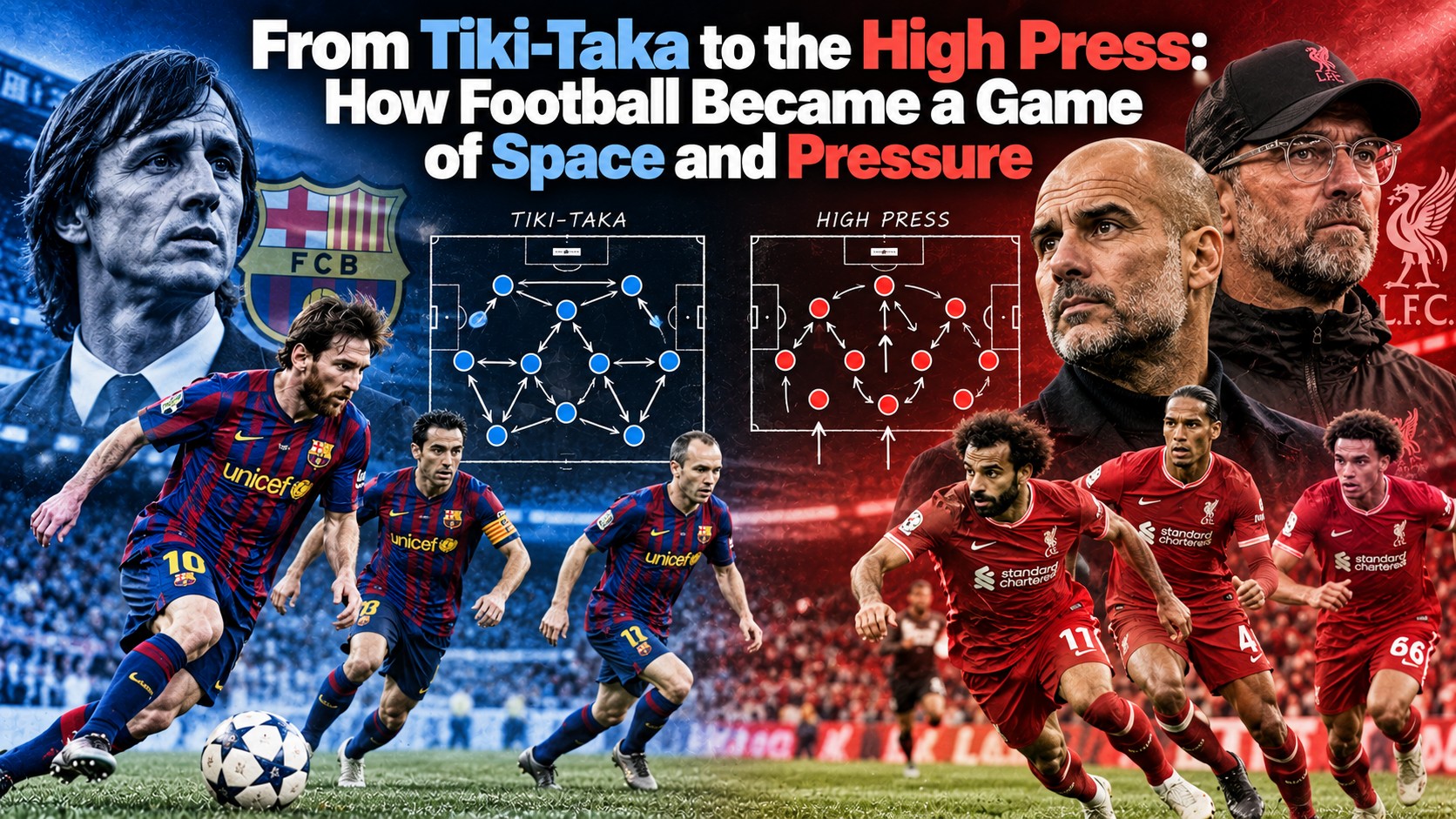
Contents The End of Fixed Positions What Is Tiki-Taka? La Masia and the Barcelona Philosophy Pep Guardiola Takes Tiki-Taka to Another Level The 2008-09 Barcelona Treble The Importance of the False Nine Spain and the Golden Generation But Possession Had a Problem The Rise of the High Press Pressing Is About Triggers Jürgen Klopp and Gegenpressing Guardiola vs Klopp The Modern Full-Back Football Becomes a Game of Space From Formations to Phases The Tactical Evolution in Numbers Why Tiki-Taka and the High Press Still Matter Football Formations FAQs The Evolution of Football Continues Football entered a new tactical era at the turn of the 21st century.
The rigid formations of earlier generations were giving way to systems in whichpossession, pressing, movement and spacebecame just as important as the positions printed on a team sheet. At the centre of this revolution was Tiki-Taka, the possession-based style associated with Barcelona and the Spanish national team.
But as teams learned how to defend against possession football, another tactical response emerged: thehigh press. From Johan Cruyff's Barcelona to Pep Guardiola's greatest teams, and from Arrigo Sacchi's pressing principles to Jürgen Klopp's gegenpressing, modern football increasingly became a contest forspace and time.
The objective was no longer simply to decide where players should stand. It was to decide where the opposition could play, how quickly they could think and what would happen immediately after possession changed hands.
The End of Fixed Positions The tactical ideas of Catenaccio and Total Football had already demonstrated that football positions did not have to be completely fixed. By the late 20th century, coaches were increasingly interested in controlling the spaces between players rather than simply assigning each player a position.
The emergence of pressing and possession football accelerated that change. A midfielder might drop between defenders to receive the ball.
A full-back might move into midfield. A centre-back might carry the ball forward.
The formation on paper remained important, but the team's shape in possession and out of possession could look completely different. Tiki-Taka is generally used to describe a style of football based around short passing, possession, movement and creating numerical advantages through positioning.
The term became strongly associated with the Spanish national team and Barcelona during the late 2000s and early 2010s, although many of its underlying principles had much deeper roots. Rather than simply passing the ball for the sake of possession, the objective was to use the ball to control the game, move the opposition around and create openings.
Written by
Sebastian Hox