
How football stadiums are redesigned for greener future: Interview with the expert
What do the fuselages of retired passenger planes have to do with making football more sustainable? Quite a lot, as it turns out.
At Strasbourg's Stade de la Meinau, sections of decommissioned Airbus A340 aircraft have been repurposed to create shading panels for the stadium's redeveloped South Stand. Rather than being scrapped, materials from the aviation industry have found a second life protecting football supporters from the sun.
Find out how you can help you team rise up the Pledgeball League table It's an unusual solution to a familiar problem, and an example of how architects are rethinking the environmental impact of the buildings that house the world's most popular sport. For Silvia Prandelli, sustainability lead for Europe, the Middle East and Africa at stadium architecture specialists Populous, such considerations have become central to the design process.
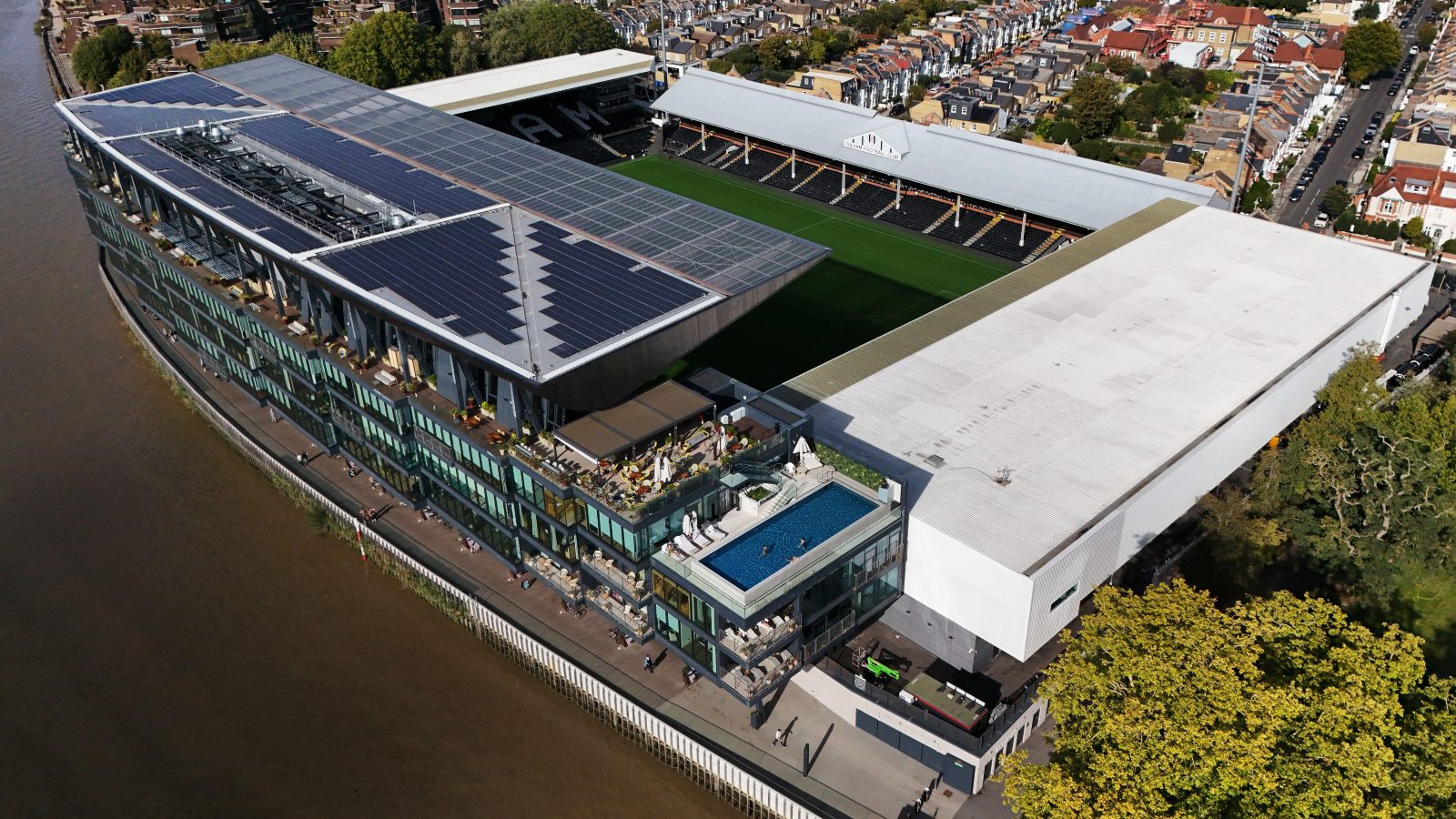
"To put it simply, sustainability has gone from being a nice-to-have to a fundamental element of every project we're working on right now," she says. Populous, whose portfolio includes Tottenham Hotspur Stadium, the Emirates and Fulham's redeveloped Riverside Stand, have established an in-house sustainability team.
Their work has helped shape the company's Enduring Places concept, which approaches sustainability through environmental, social and economic considerations. "We truly believe that what we're doing has an impact on the planet, and that we should leave the places where we build our stadiums and arenas better than we found them," Prandelli says.
One of the biggest questions facing clubs is whether replacing an ageing stadium is environmentally justifiable. Manchester United's ambitions for a new ground have brought that debate into focus.
Demolishing an existing stadium and constructing another requires enormous quantities of materials, with substantial emissions associated with producing concrete, steel and other building components. Renovation generally avoids some of those upfront emissions, but Prandelli argues that the answer isn't always straightforward.
"There is an upfront carbon saving in renovating a venue rather than building a new one," she explains. "But at the same time, existing stadiums sometimes cannot be successfully adapted to provide a high standard for fans.
An older stadium might also have inefficient heating, ventilation and electrical systems that are difficult to modernise without extensive structural changes. Populous therefore assesses projects individually, considering both construction emissions and the long-term performance of the completed venue."