
Max Eberl's own experience informs response to Vincent Kompany collapse: "The body will scream."
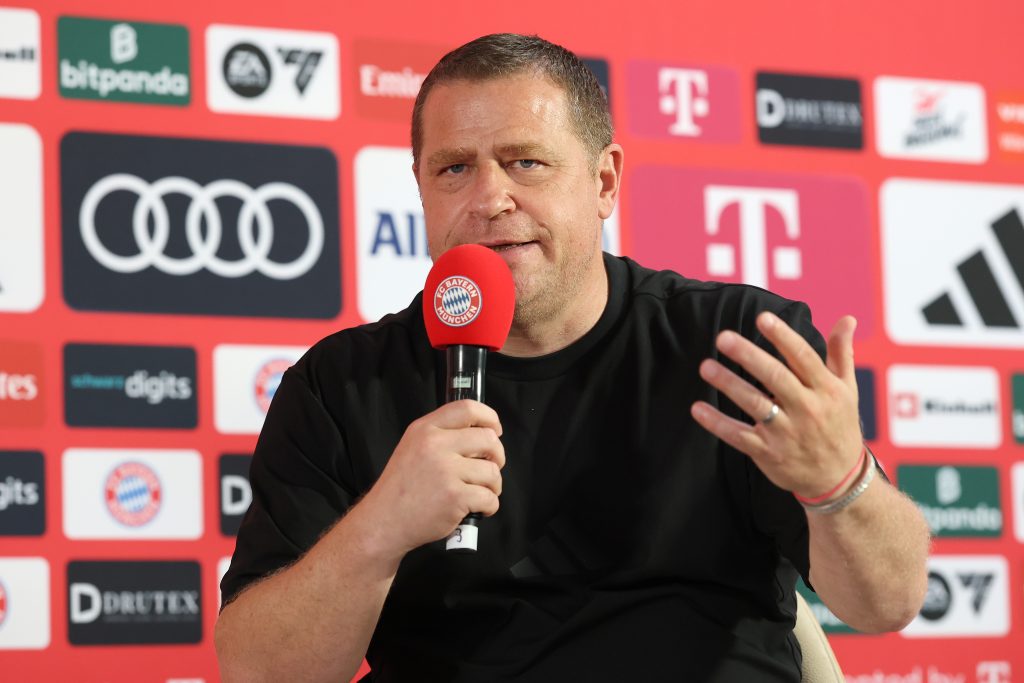
Max Eberl's reaction to Vincent Kompany's collapse carries particular weight given the Bayern Munich executive's own experience of being forced to step away from professional football for health reasons. Speaking on Saturday after Kompany was admitted to hospital, Bayern's Board Member for Sport repeatedly stressed that the head coach would be given as much time as necessary to recover.
Eberl explicitly refused to speculate about the medical cause of Friday's incident, noting that further examinations were still required. He nevertheless reflected more broadly on the danger of continuing to work when the body is signalling that something is wrong.
"If you don't listen to the quietest signals your body sends you, eventually your body will scream," Eberl said at Bayern's pre-match press conference ahead of Sunday's Bundesliga showdown against Freiburg. "And that's what has happened now.
The 52-year-old described Kompany as an incredible worker" and suggested that one of Bayern's responsibilities during his recovery would be to protect the coach from his own instinct to return to work. "It will be a big task for us to protect him from himself to a certain extent," Eberl said.
In speaking on the matter, Eberl provided a blatant "verbal echo" with his own experience. Eberl possesses first-hand experience of stepping away Those remarks inevitably resonate with Eberl's own history in German football.
In January 2022, Eberl abruptly resigned as Borussia Mönchengladbach sporting director after more than two decades with the club as a player and executive. An emotional Eberl told reporters at the time that he was "drained" and "tired" and no longer possessed the energy required to perform the role to the standard he expected of himself.
The decision came despite Eberl having extended his Gladbach contract only 13 months earlier. Rather than immediately seeking another position, he stepped away from professional football entirely.
Later that year, Eberl spoke in considerably greater detail about the psychological crisis that had led to his departure. He revealed that his recovery involved travelling, seeking professional help, reflecting on what had happened, and keeping a personal journal.
Only months later did he begin to feel that his energy and desire to work in football were returning. "In August, I felt like football was firing me up again," Eberl said at the time.